For owner-operators who have spent decades building a local company, the decision to transition ownership represents a major milestone. A business is often more than just a source of revenue; it is a repository of community trust, family heritage, and historical relationships. Passing this legacy onto the next owner requires careful preparation. Far too often, owners focus solely on high-level negotiations while neglecting the day-to-day operational details that keep the enterprise running smoothly. To ensure a transition that respects the history of the firm, sellers must prepare clean, buyer-ready facts that validate the health of the operation. This preparation includes verifying normalized owner benefits and understanding key financial benchmarks. Having a clear grasp of the SDE meaning in business valuation is a critical first step in showcasing the true earning power of a small to mid-sized business to prospective buyers.
Preserving the Story of the Business
Every long-running business has an origin story that defines its role in the local community. Buyers are not just purchasing equipment and inventory; they are also taking custody of a reputation. When documenting your history, detail the founding values, milestones, and how the business has adapted over time. Reflecting on these elements helps preserve the unique identity of your organization. For example, when exploring old-fashioned values in history legacy and modern applications, it is clear that trust, reliability, and personal customer service remain highly valued in modern business transactions. Documenting these values helps a buyer understand why clients are loyal and how to maintain those relationships after the purchase.
Furthermore, taking the time for discovering our roots reflections on family heritage and values provides context for the local impact of the business. Write down the narratives of key customer relationships, community involvement, and local sponsorships. These details show that the business is an integral part of the local fabric, which adds intangible value that standard spreadsheets cannot capture.
Preparing Buyer-Ready Records and Financials
Clean financial documentation is the foundation of any successful business sale. Buyers and their lenders will examine tax returns, profit and loss statements, and balance sheets from the past three to five years. In owner-operated companies, personal and business expenses are often blended. To present a clear picture, owners must identify and document all seller discretionary earnings and normalized owner benefits. These adjustments include personal vehicle leases, family health insurance, non-recurring repairs, and owner salaries that differ from market rates. By separating these personal benefits from core operational expenses, you present a transparent and realistic view of the cash flow generated by the business. This process reduces buyer friction during due diligence and establishes trust from the outset.
Beyond the primary financials, owners should compile detailed records of customer history and purchasing patterns. A buyer will want to know if revenue is concentrated in a few large clients or spread evenly across a diverse base. Documenting this history demonstrates stability and reduces the perceived risk of client turnover post-sale.
Documenting Staff Knowledge and Facilities
A significant portion of a company’s value resides in its employees and operational workflows. In long-running businesses, processes are frequently stored only in the owner’s head or in the memory of senior staff. To ensure a smooth transition, start writing down standard operating procedures. Detail daily routines, supplier contact information, inventory management practices, and software login instructions. Documenting staff roles and responsibilities helps the buyer understand the team’s capabilities and reassures them that the business can operate efficiently from day one.
Facilities management is another critical area. Create a comprehensive file of property lease agreements, equipment maintenance logs, utility details, and building repair histories. Having these records organized prevents delays during the property inspection phase and shows that you have maintained the physical assets of the business with care.
Finally, outline clear expectations for the transition period. Most buyers will require the outgoing owner to stay on for a set number of weeks or months to train staff, introduce clients, and explain complex workflows. Setting these expectations early in a structured Indiana business succession plan helps both parties align on their roles during the transition. A well-defined handoff protects the legacy you have built and supports the new owner in achieving long-term success.
Legacy Preservation and Transition Checklist
To help guide your preparation, use this practical checklist to track your progress as you prepare your business for transition:
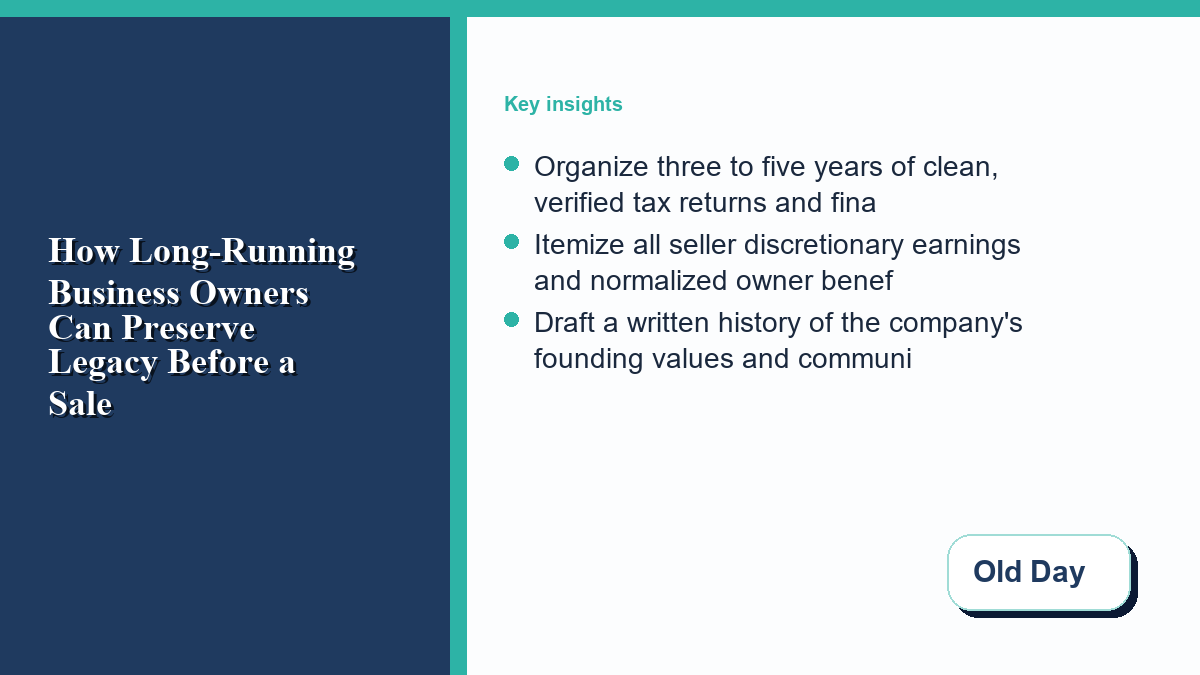
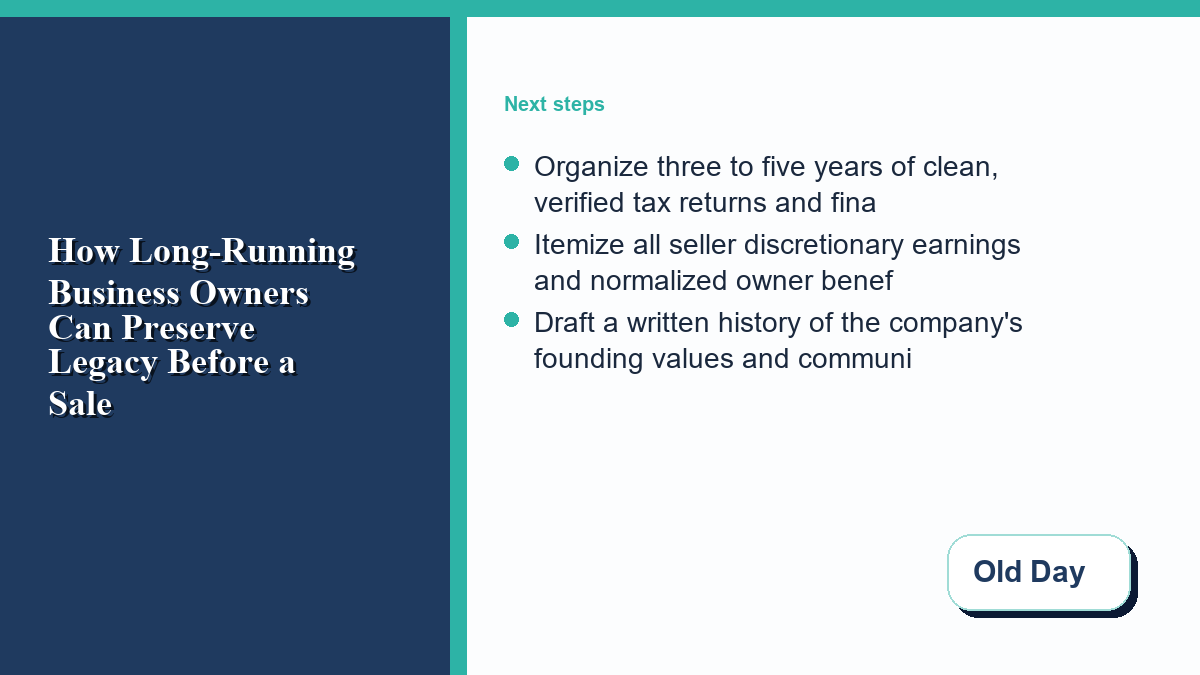
- Organize three to five years of clean, verified tax returns and financial statements.
- Itemize all seller discretionary earnings and normalized owner benefits with supporting receipts.
- Draft a written history of the company’s founding values and community milestones.
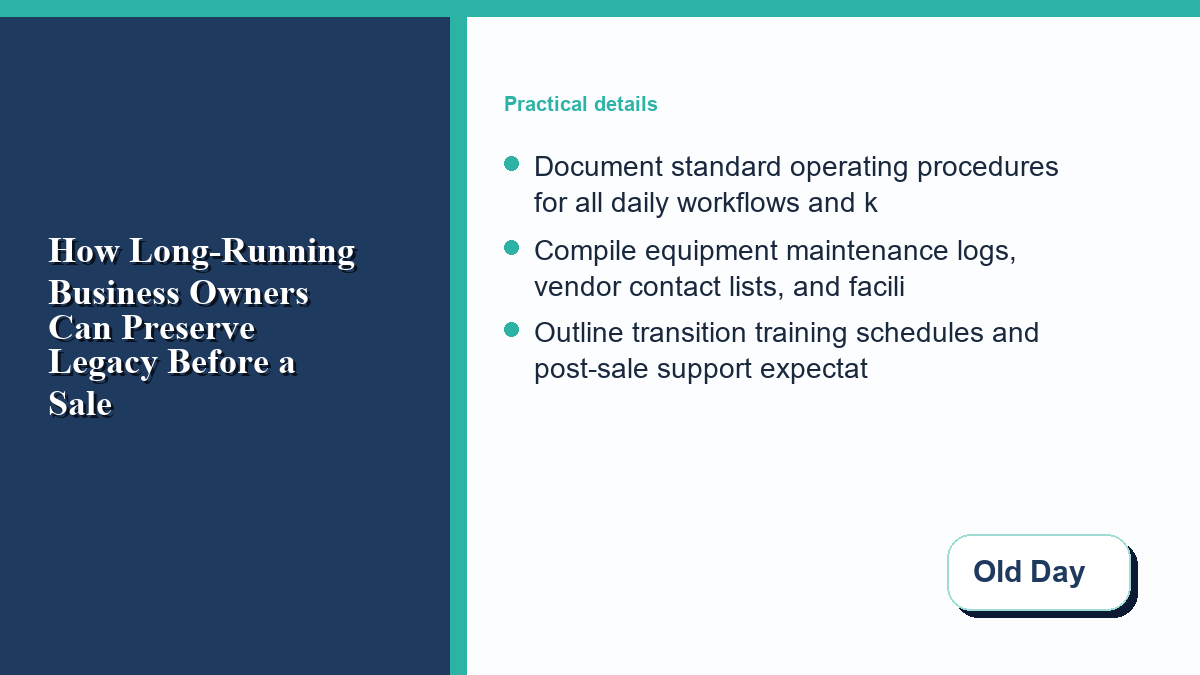
- Document standard operating procedures for all daily workflows and key staff roles.
- Compile equipment maintenance logs, vendor contact lists, and facility lease agreements.
- Outline transition training schedules and post-sale support expectations.
Frequently Asked Questions
How long does it take to prepare a long-running business for a sale?
Preparation typically takes six to twelve months. This timeframe allows owners to clean up financial records, document daily processes, and resolve any outstanding operational issues before listing the company.
Why is documenting owner benefits so important?
Documenting owner benefits shows buyers the true cash flow generated by the business. Adjusting for personal expenses that are run through the company helps establish a fair purchase price based on realistic earnings.
Should I notify my employees about a potential sale immediately?
In most cases, it is best to keep sale preparations confidential until a purchase agreement is signed. This prevents unnecessary staff anxiety and maintains operational stability during negotiations.
Disclaimer: This article is provided for general informational purposes only. It does not constitute legal, tax, valuation, or financial advice. Business owners should consult with qualified professional advisors before making any decisions regarding a business sale or transition.


0 Comments