Vintage countertop appliances can be beautiful records of changing materials, industrial design, and domestic life. A chrome toaster, ceramic waffle iron, desk fan, or stand mixer may also have an incomplete service history and decades of wear that cannot be judged from a polished case. The same object can be historically interesting and unsuitable for immediate use.
That distinction matters when a new find comes home from an estate sale, flea market, or family attic. A collector should not use a quick power-on test as the first step. Keep the item unplugged while you identify it, document what is known, search current safety notices, and decide whether a qualified appliance or electrical repair professional should evaluate it.
This checklist treats historical research, recall research, and present-condition review as three separate questions. No single question settles the others. A clean-looking appliance can still have hidden deterioration, while an empty online search does not prove that an older product is safe.
Start With Three Separate Questions
The appeal of the vintage lifestyle often comes from connecting an object to the period in which it was designed. Safety research needs a narrower record. Before making any decision about use, ask:
- What exactly is the item? Record the maker, model, date or serial code, electrical markings, and any evidence of earlier repair.
- Is there an official safety notice for that identification? Search by exact model details and read the notice itself when one appears.
- What is its condition today? Aging, storage, damage, and undocumented modifications can matter even when no matching recall appears.
Keep the answers separate in your notes. A recall notice is not a condition report, and a visual inspection is not a recall search.
Document the Appliance Before Researching It
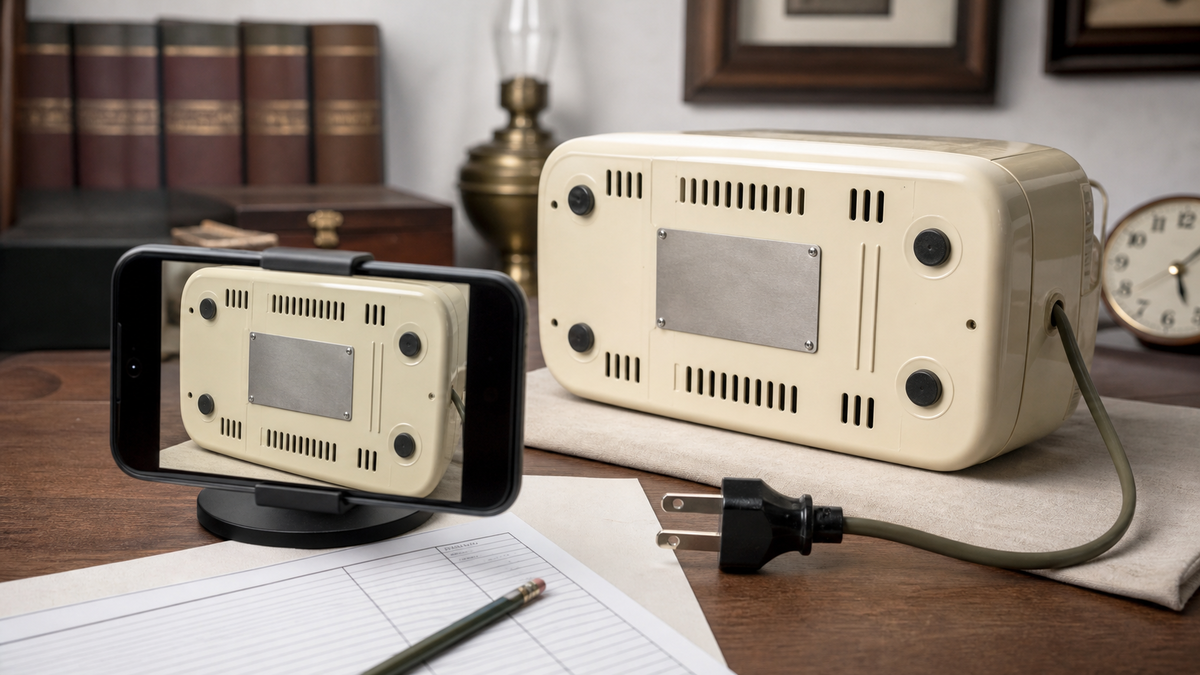
Create an identification record while the appliance remains unplugged. Look for a nameplate, stamped base, paper label, or data tag without opening a case or removing a safety cover. Depending on the item, the label may be on the back, underside, door frame, or base.
Record only what is actually visible:
- manufacturer or brand name, including spelling and punctuation;
- model number, series, type, and any letter suffix;
- serial number, lot number, or date code;
- listed voltage, frequency, wattage, or current;
- plug shape and number of prongs;
- certification or inspection marks, without assuming what an unfamiliar mark means;
- handwritten repair dates, shop stickers, replaced parts, or owner notes.
Photograph the full item, label, cord, plug, controls, and every side. Use clear light and take a second image if glare hides characters. Do not scrape, polish, or remove a fragile label to improve the photograph.
Collectors who already keep records for valuing collectibles can add a safety section to the same provenance file. Note where the item came from, how it was stored, whether anyone claims it was recently used, and which facts remain unknown. Treat a seller’s statement as history to investigate, not as an electrical inspection.
Search Current Official Recall Records
Use the identification details rather than a broad phrase such as “old toaster recall.” Start with the U.S. Consumer Product Safety Commission recall search for consumer products within its jurisdiction. Recalls.gov is a federal portal that directs people to recall information from participating U.S. agencies.
Try the brand and full model first. Then repeat the search with useful variations: a former company name, a model without punctuation, a series name, or a likely successor manufacturer. If a result appears, compare every identifying field in the notice. A similar photograph or shared brand is not enough to establish that the notice covers your item.
A consolidated product recall search can provide another way to check the recorded brand and model terms. Use it as a discovery step, then follow any matching result to the responsible agency or manufacturer notice before acting.
Online research has limits, especially for objects that predate modern digital records. Companies close or merge, model names are reused, paper notices may not be searchable, and labels become unreadable. Therefore:
- no result does not mean “no hazard”;
- a result for a related model does not automatically apply to yours;
- a blog post, marketplace listing, or collector discussion is not an official remedy notice;
- a current official notice should be followed as written rather than interpreted from a summary.
Save the search date, terms used, and URLs reviewed. That record helps a future owner repeat the research and shows which questions remain open.
Check Present Condition Without Energizing the Item
Recall research and condition review solve different problems. An appliance with no matching recall can still be damaged by age, moisture, impact, pests, storage, or an earlier repair. Keep it unplugged and limit your own review to what can be observed safely from the exterior.
Stop and seek qualified help when you find any of the following:
- a cut, cracked, brittle, taped, frayed, or heat-damaged cord;
- bent, loose, scorched, corroded, or cracked plug parts;
- exposed conductors or wiring visible through a gap;
- missing covers, guards, feet, fasteners, or strain relief;
- scorch marks, melted material, unusual residue, or evidence of liquid entry;
- a loose control, damaged switch, cracked housing, or unstable base;
- mismatched screws, spliced cords, added switches, or other unexplained modifications;
- an unreadable label that prevents reliable identification.
Do not open the case merely to complete this checklist. Do not bypass a switch, fuse, interlock, ground connection, or other protective part. Do not install a new plug and assume the rest of the appliance is ready. Internal insulation, heating elements, motors, capacitors, and earlier repairs require the right training and test equipment to evaluate.
Read the Exact Notice and Remedy
If you find a matching recall, read the complete current notice. Confirm the model, production range, date code, and any other identifiers. Follow the listed stop-use and contact instructions. Remedies vary by notice and may change over time, so do not promise yourself or a buyer a refund, repair, or replacement before confirming it with the organization named in the notice.
If the manufacturer no longer exists or the listed contact path is unavailable, that does not make an affected product suitable for use. Preserve the notice in the provenance file and choose a conservative path for the object.
Choose a Defensible Path
The goal is not to force every collectible back into service. It is to make a decision that matches the evidence.
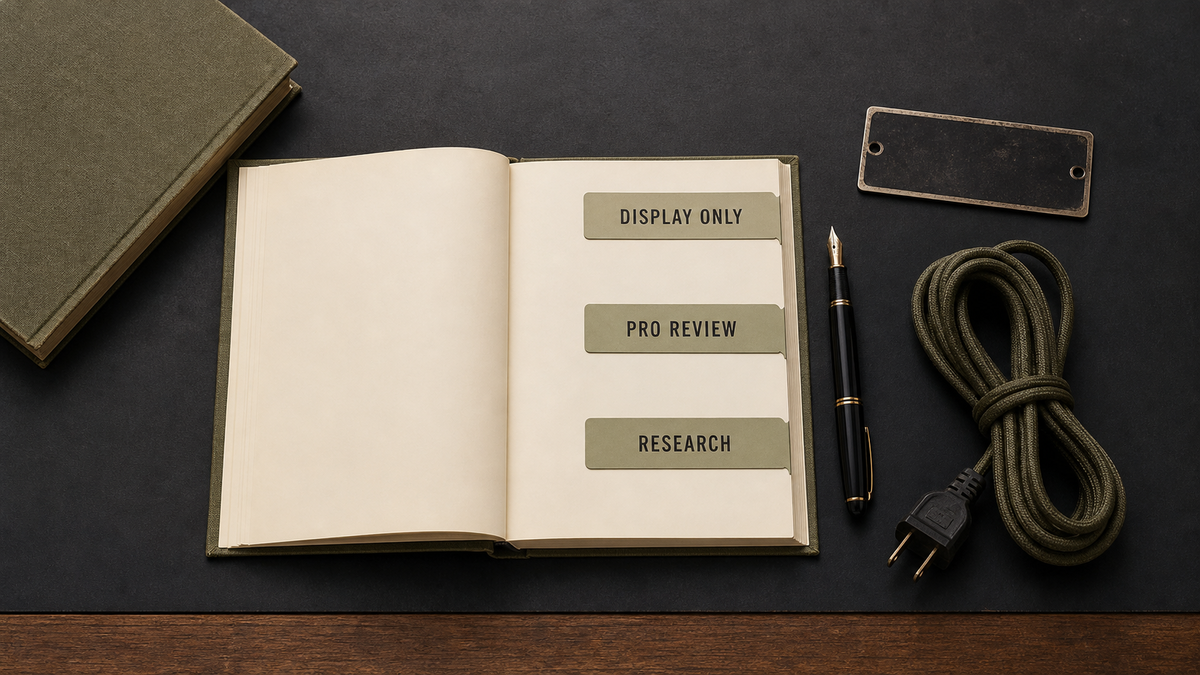
Display Only
Keep the appliance unplugged as a decorative or teaching object when identification is impossible, important parts are missing, visible damage is substantial, or a notice says to stop using it and no verified remedy is available. Display can preserve the object’s vintage heritage without treating appearance as proof of safe operation. Secure or label the cord so another person does not plug it in casually.
Professional Evaluation
If operation is still desired, bring the item and your research record to a qualified professional who works with the relevant appliance or electrical equipment. Ask what inspection and testing are appropriate, which original features may create risk, and whether any proposed change would affect historical value. A professional evaluation may still conclude that the item should remain display-only.
Further Official Research
Continue research when the label is readable but the company history, model lineage, or notice coverage remains unclear. Look for manufacturer successor information, agency documents, dated manuals, library or newspaper archives, and well-documented collector references. Use those materials to improve identification, but return to an official notice or qualified evaluation for the safety decision.
Vintage Appliance Research Checklist
- Keep the appliance unplugged throughout identification and exterior review.
- Photograph the appliance, label, cord, plug, controls, and visible damage.
- Record the exact brand, model, serial or date code, and electrical markings.
- Note provenance, storage history, repair labels, and unanswered questions.
- Search CPSC and participating federal recall sources with exact identifiers.
- Check useful spelling, punctuation, company-name, and model variations.
- Compare any notice with the item’s complete identifying details.
- Save the notice, search terms, URLs, and date of research.
- Stop for damaged cords, exposed conductors, heat damage, missing covers, or unknown modifications.
- Choose display-only, qualified evaluation, or further research without using an empty search result as a safety verdict.
A vintage appliance can tell a strong story without being plugged in. Careful identification and documented research protect that story, give future owners better information, and make the final decision easier to explain.



0 Comments